
Network Virtualisation Software Defined Network (SDN) SDN planes Network functions virtualization (NFV) IMS Virtual Network Functions (VNFs) OpenStack Innovations in telecommunication today are largely driven by the advancements in Open source tech tools, standards and stacks. IP-based video and voice communication systems, Unified Communication systems such as Enterprise CPaaS platforms or even an external independent … Continue reading Software Defined Networks ( SDN) and Network Function Virtulaization ( NFV) for Communication networks
Category: Access and Physical Layer
5G and IMS

striking features of 5G - entirely IP based ability to connect 100x more devices ( IOT favourable ) speed upto 10 Gbit/s high peak bit rate high data volume per unit area virtually 0 latency hence high response time
Wifi 6

Current and older Wifi standards802.11a802.11b802.11g802.11nWifi 6Wifi Componentswireless access point (AP)Wireless routers Mobile HotspotWifi performanceTransmitter powerAntennaWifi SecurityWEP (Wired Equivalent Privacy) WiFi Protected Access version 2 (WPA2) WiFi Protected Setup (WPS) WPA3 WPA3-Enterprise Wi‑Fi is a trademark of the Wi-Fi Alliance. It belongs to the family of radio technologies commonly used for wireless local area networking (WLAN) devices. Current and older … Continue reading Wifi 6
4G/Long Term Evolution (LTE), VOLTE

LTE stands for Long Term Evolution and is a registered trademark owned by ETSI (European Telecommunications Standards Institute) for the wireless data communications technology and a development of the GSM/UMTS standards.
MIMO ( multiple-input and multiple-output )
SISO - Single Input Single Output SIMO - Single Input Multiple output MISO - Multiple Input Single Output MIMO - Multiple Input multiple Output Multiplying the capacity of a radio link using multiple transmission and receiving antennas to exploit multipath propagation.Key technology for achieving a vast increase of wireless communication capacity over a finite electromagnetic … Continue reading MIMO ( multiple-input and multiple-output )
Evolution of voice Communication

This post describes the evolution of voice communication in access ,transport and session layers respectively.
2G to 3G – generation of telecom

Where 2G is referred to as the GSM era , 2.5 G as the GPRS with GSM era. As compared to its predecessor 1G which used FDMA ( Frequency Division Multiplexing ) for channelization , 2G used used TDMA and CDMA for dividing the channels .
L1, L2 ,L3 equipment and L3 vs L4 switches
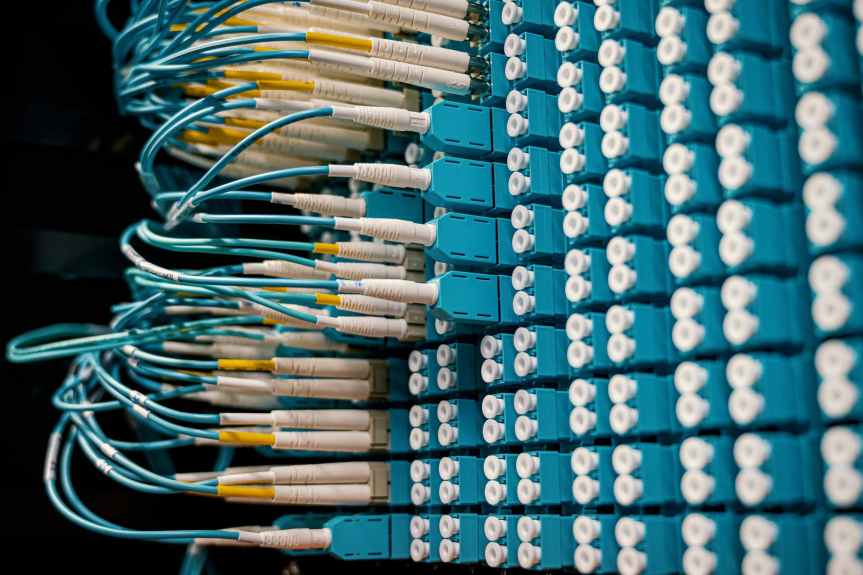
Layer 1: Physical LayerData : Physical bitsEquipment : cables, fiber optic, ethernet hubsLayer 2 Data Link2A. MAC ( Medium Access control)2B. LLC ( Logical Link Control)Data : FramesEquipment : Switches , Bridges , Network Card.Layer 3 : Network LayerData : packetEquipment: FirewallsL2 Switch (hardware)L3 Switches (logical addressing)Layer 4–6 switch (LB,NAT,SBC)Layer 7 switch (CDN,IPPBX) Layer 1: … Continue reading L1, L2 ,L3 equipment and L3 vs L4 switches
 Telecom R & D