
Service broker is a service abstraction layer between the network and application layer in telecom environment. SB( Service Broker ) enables us to make use of existing applications and services from Intelligent Network’s SCP ( Service control Point ) , IMS’s Application Server as well as other sources in a harmonized manner .
Author: altanai
Specialized in CPaaS, carrier-grade WebRTC-SIP telecom platforms for Unified communication-collaboration, signaling gateways, SBC, soft turrets, IoT-surveillance and telecom integrations.
Ardent contributor to Open Source software, avid freelancer, innovator and technical writer (telecom.altanai.com ).
Inventor of "RamuDroid" an IOT Road-Cleaning robot
Author of book "WebRTC Integrator's Guide" published by Packt
JSR 116 – SIP SERVLET 1.0
SIP Servlet 1.0 API •JSR 116 •Built into the Servlet container that also hosts portlets and HTTP Servlets. •SIP Servlet API developed under the JCP (Java Community Process) as JSR 116 (Java Specification Request), as a set of neutral interfaces Servlet Container •Environment in which a servlet can exist •Loads and initializes a servlet •Invokes … Continue reading JSR 116 – SIP SERVLET 1.0
Freeswitch Integration with Telecom Carrier
This articles is a follow up of the earlier freeswitch capability introduction and some generic usecases around dialplans and contexts. This post contains instructions on how to integrate your SIP VOIP Freeswitch server to ITSP ( Internet Telephony Service Providers) which are basically part of large telecommunications companies. First we check the external profile via … Continue reading Freeswitch Integration with Telecom Carrier
WEBRTC CALL BETWEEN BROWSER AND SIP PHONE
HTML5 and WebRTC enabled Web Client : We are using open source HTML5 SIP client entirely written in javascript to make it light and to have easy integration with the SIP server. No extension, plugin or gateway is needed to initiate the call from the web Client. The media stack rely on WebRTC. The client … Continue reading WEBRTC CALL BETWEEN BROWSER AND SIP PHONE
Public Switched Telephone Network
What is a Circuit Switched Telephone call ? circuit switched - During the set up portion of a telephone call, a circuit is created, which is then torn down when the call is completed. Originally, the entire telephone network was analog, but it is now mostly digital. The digital parts include the switches and backbone lines … Continue reading Public Switched Telephone Network
sound waves
Sound is converted into electricity by a telephone and then transmitted as an analog signal.These waves have 3 fundamental characteristics:Amplitude, meaning the height (intensity) of the waveFrequency, which is the number of waves that pass in a single second and is measured in Hertz (cycles/second) (wavelength, the length of the wave from crest to crest, … Continue reading sound waves
Freeswitch Modules

This section describes some of the popular and useful freeswitch module. Although there are many more modules, I have picked a few of commonly used one and divided them into categories Logger modules in FreeswitchXML Interfaces in FreeswitchEvent system and Event Handlers in Freeswitchmod_amqpmod_cdr_csvDataBaseApplicationsInfo, Intercept and eavesdropChannel operationsDialplan Tools ( DPTools)WaitSchedulePlayPreprocessRecordsayTimeLimitDTMFAPISocketLanguagesJitterBufferASR/TTSDialplan InterfacesCodec InterfacesFile Format Interfaces … Continue reading Freeswitch Modules
FreeSwitch SIP and Media Server

Architecture and Design of FreeswitchCoreThreaded Model State Machine in Freeswitch CoreChannel VariablesDialplanSpeak Time and Date on CallCall Routing based on destination number and forwarding to voice mail on no answerCall routing based on day and timeMatch incoming network IP address with pre configured IPStore captured values in standard variables PlaybackMedia recording and playback in audio (wav)Routing by … Continue reading FreeSwitch SIP and Media Server
Features set JAINSLEE vs SIP/J2EE
Feature Set JAINSLEE vs SIP/J2EE Portability Portability of JAINSLEE is limited to number of available applications servers on the market. Complexity 1) SIP Servlet components handle directly SIP signaling, there is no abstraction layer so there is no loss in network features. 2) If a comparison between SIP Servlets and JAIN SLEE is made it … Continue reading Features set JAINSLEE vs SIP/J2EE
H 323
International standard for multimedia communication ( real-time voice, video, and data communication) over packet-switched networks includes the standards H.323, H.225.0, H.245, the H.450-series documents, and the H.460-series. T.120 for data collaboration and file transfer. Ability to utilize network services for address resolution, including ENUM, LDAP, and DNS an provide various supplementary services Call transfer , … Continue reading H 323
RFID- Radio Frequency Identification
Automatic identification method, relying on storing and remotely retrieving data using devices called RFID tags or transponders. An RFID tag is a small object that can be attached to or incorporated into a product, animal, or person. RFID tags contain silicon chips and antennas to enable them to receive and respond to radio-frequency queries from an RFID transceiver. Passive tags require no internal power source, whereas active tags require a power source.
SIP Servlets – Develop and Deploy
With this article I will outlines the SIP servlet creation and various call routing logic development. A simple proxy SIP ser vlet application also has 4 parts Extension SIP servlet Classand global var declaration public class VoiceCall extends SipServlet{ public ServletContext context; SipApplicationSession sas; public SipFactory factory; SipServletRequest incoming; public static final Log log = … Continue reading SIP Servlets – Develop and Deploy
Wave Modulation – analog and digital

This article touches upon wave modulation techniques used in physical layer that allows one or multiple low bandwidth signals to use or share a high frequency bandwidth. Note that post only covered the lowest layer of OSI model ie physical layer and not the data link layer which actually provides access technologies liek FDMA , TDMA , CDMA etc.
L1, L2 ,L3 equipment and L3 vs L4 switches
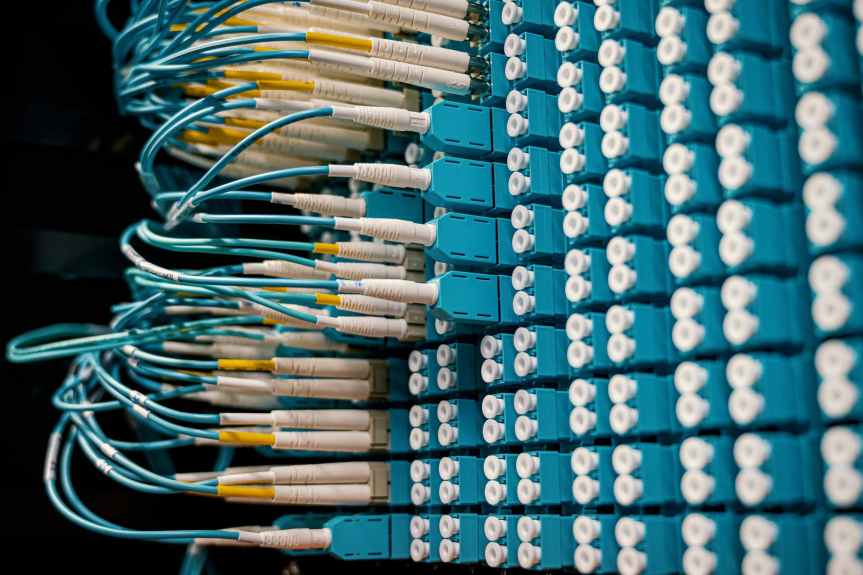
Layer 1: Physical LayerData : Physical bitsEquipment : cables, fiber optic, ethernet hubsLayer 2 Data Link2A. MAC ( Medium Access control)2B. LLC ( Logical Link Control)Data : FramesEquipment : Switches , Bridges , Network Card.Layer 3 : Network LayerData : packetEquipment: FirewallsL2 Switch (hardware)L3 Switches (logical addressing)Layer 4–6 switch (LB,NAT,SBC)Layer 7 switch (CDN,IPPBX) Layer 1: … Continue reading L1, L2 ,L3 equipment and L3 vs L4 switches
 Telecom R & D